
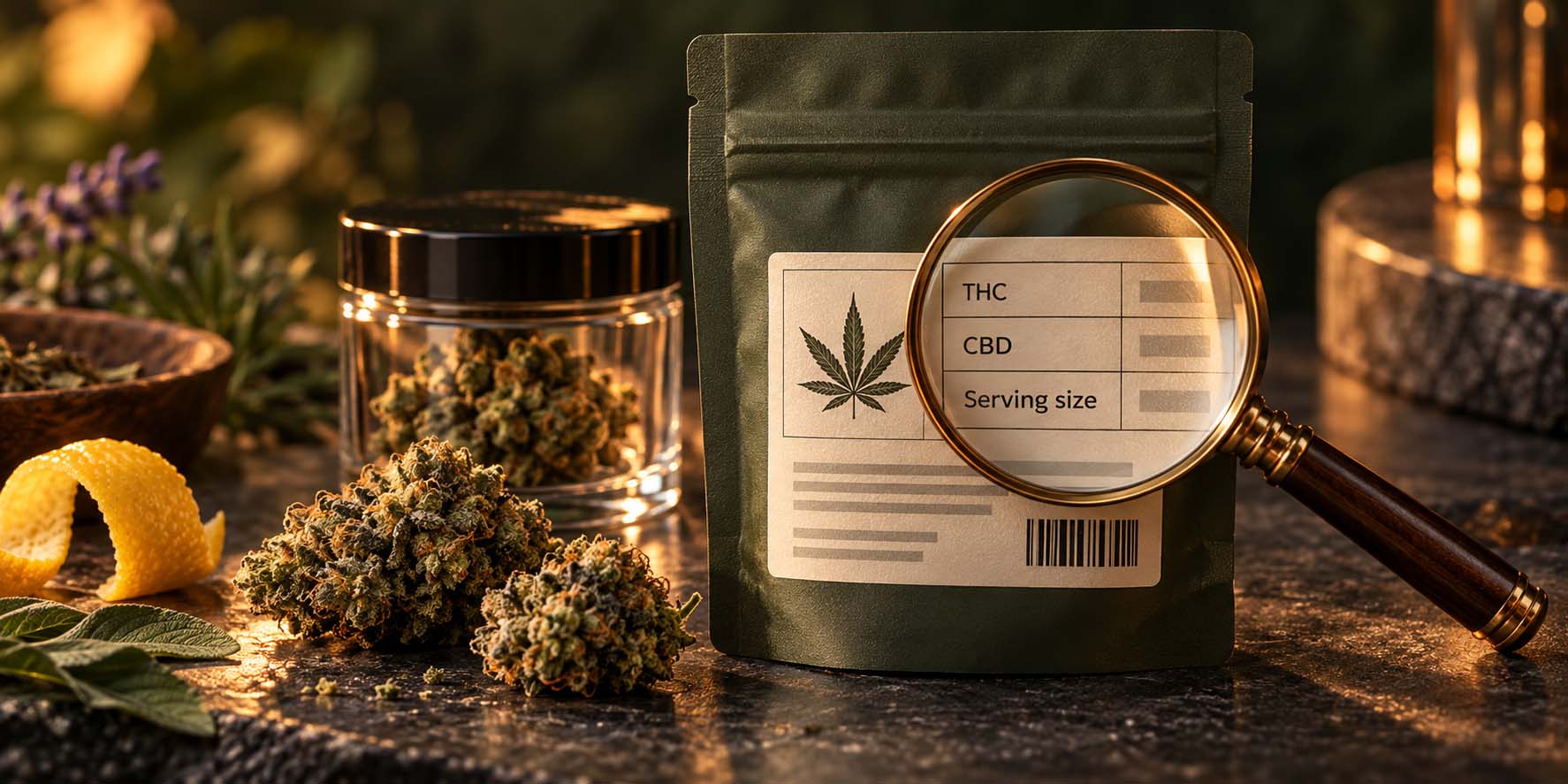
A cannabis label can fit a lot of information into a small space.
You might see percentages, milligrams, ingredients, dates, and a batch number alongside the product name. Understanding those details can help you ask better questions and avoid confusing the amount in one serving with the amount in the entire package.
Here is a straightforward guide to reading cannabis labels at a Massachusetts dispensary.
Start With the Product Type and Package Amount
Before looking at the THC number, identify what the package contains.
Is it flower, a pre-roll, an edible, a concentrate, or another product? Next, look for the net weight or volume.
That number describes the amount of product in the package. It does not necessarily tell you how much THC it contains.
For example, a package labeled “3.5 grams” indicates the product’s weight. A separate cannabinoid panel provides information about THC, CBD, and other compounds.
Read these details together to understand both the package amount and its cannabinoid content.
What Does THC Percentage Mean?
A THC percentage describes a concentration.
For a simplified example, 20% THC by weight means approximately 200 milligrams of THC per gram of material. That calculation describes what is in the material; it does not tell you how much someone would absorb or how they would feel.
When comparing labels, check that you are looking at the same measurement. A figure labeled “THC” may be listed separately from “total THC” or other cannabinoids.
If the label includes terms you do not recognize, ask a staff member to explain what each number represents.
Massachusetts requires cannabis labels to identify cannabinoids and their amounts. The Cannabis Control Commission also audits labeled potency. A printed percentage provides testing information, but it cannot promise a particular experience.
What Is the Difference Between Percentages and Milligrams?
Percentages describe concentration. Milligrams describe an amount.
This distinction is particularly useful when reading edible labels.
A package might display the total milligrams of THC across all its contents, while another part of the label shows the amount per serving.
Those numbers answer different questions:
- THC per serving: How much THC is in one labeled serving?
- Total THC per package: How much THC is in the entire package?
- Number of servings: How many labeled servings does the package contain?
Always check which number you are reading.
One Package Does Not Necessarily Mean One Serving
Imagine a package labeled with 10 servings and 5 milligrams of THC per serving.
The package contains 50 milligrams of THC in total.
This example explains how the numbers relate to each other. It is not a recommendation about how much to consume, and a labeled serving is not a personalized dose.
Do not assume one physical item always equals one serving. Read the directions to understand how the manufacturer defines a serving.
Massachusetts edible-label requirements include serving information and cannabinoid amounts for both the package and individual servings.
Read THC and CBD Information Separately
THC and CBD are different cannabinoids—compounds found in cannabis.
THC is the main compound responsible for cannabis’s intoxicating effects. CBD does not produce the same high, but its presence does not make a product containing THC non-intoxicating.
If a label displays a ratio, check the order in which the cannabinoids are listed.
For example, “2:1 CBD” means the labeled amount of CBD is twice the amount of THC. A ratio alone does not tell you the actual milligrams in a serving, so look for those amounts too.
Check Ingredients, Dates, and Storage Instructions
Cannabinoid information is only part of the label.
Depending on the product, look for:
- Ingredients and allergen warnings.
- Manufacturing or packaging dates.
- A use-by or expiration date.
- Storage instructions, including refrigeration when applicable.
- Directions and required warnings.
Do not assume that two products with similar names contain the same ingredients.
Keep the original packaging so you can access those details after you leave the dispensary.
What Is a Batch Number?
A batch number identifies a particular production group.
It helps distinguish your package from other batches of the same product. If you have a question about a label or need to check a product notice, that number can help identify the exact item involved.
When contacting a dispensary about a product, have its name, batch number, and packaging available.
Ask Questions Before Making Assumptions
You do not need to memorize every term on a cannabis label.
A few useful questions can make the information easier to understand:
- “Is this number for one serving or the whole package?”
- “What does this percentage refer to?”
- “How many servings are in this container?”
- “Where can I find the ingredients and storage instructions?”
At Zahara Cannabis in Attleboro, you can ask our team to explain product-label information. For questions about medical conditions or medication interactions, speak with a qualified healthcare professional.
Explore our Cannabis 101 resources for more educational guides, or visit our Attleboro location page for store details.
For adults 21 and older. Please Consume Responsibly. Marijuana can impair concentration, coordination, and judgment. Do not operate a vehicle or machinery under the influence of marijuana.