
Cannabis Terpenes Explained: How Aroma and Flavor Shape Your Experience
Why can one cannabis strain smell like fresh citrus while another is earthy, floral, peppery, or pine-like?
A lot of that comes down to terpenes.
If THC and CBD are the cannabis compounds you hear about most often, terpenes are major contributors to the plant’s aroma and perceived flavor. They are not the entire story, though. Sulfur compounds and other volatile molecules can also help give cannabis its distinctive scent.
Here are cannabis terpenes explained without making things more complicated than they need to be.
What Are Cannabis Terpenes?
Terpenes are naturally occurring aromatic compounds found throughout the plant world—not just in cannabis.
They contribute to the recognizable scents of citrus fruit, pine trees, herbs, flowers, spices, and countless other plants.
Cannabis can contain many terpenes at once. The specific combination and concentration of those compounds create what is commonly called a product’s terpene profile.
That’s one reason two cannabis strains or cultivars with similar THC percentages can smell and taste completely different.
Why Do Terpenes Matter When Shopping for Cannabis?
For many shoppers, terpenes provide another way to compare products beyond THC percentage.
If you open a container of flower and immediately notice citrus, berries, earth, pine, herbs, or spice, you’re experiencing part of that product’s aromatic profile.
Those differences can be especially noticeable in flower and concentrates produced to retain more of the plant’s volatile compounds. Zahara’s flower, vape, and concentrate selections give shoppers several formats for exploring cannabis aroma and flavor.
Common Cannabis Terpenes You May See
You don’t need to memorize a terpene dictionary to shop for cannabis, but a few names appear frequently:
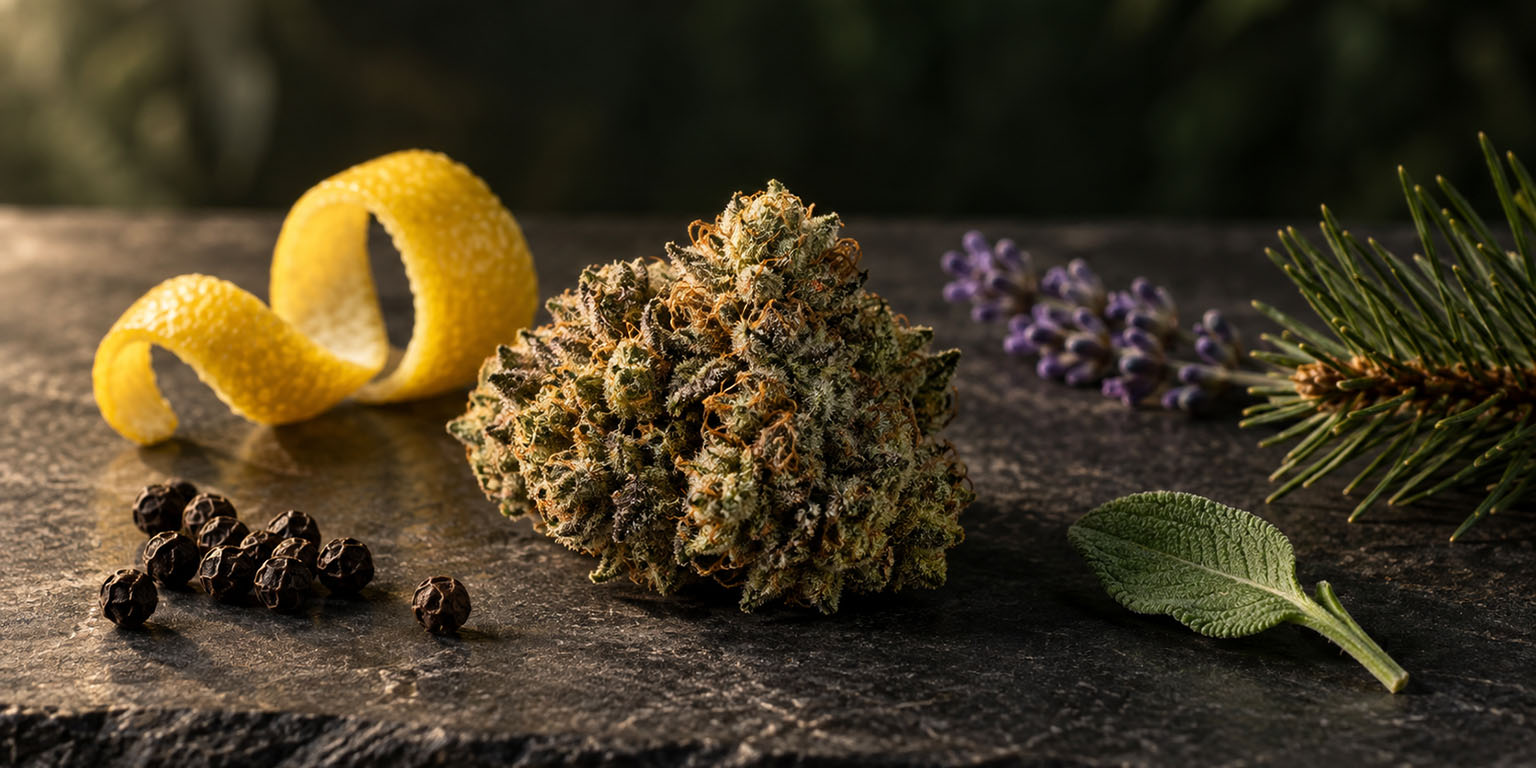
- Limonene is associated with citrus aromas such as lemon and orange.
- Pinene has the fresh, sharp pine scent its name suggests.
- Myrcene is often described as earthy, herbal, or musky.
- Caryophyllene can contribute peppery or spicy notes.
- Linalool is commonly associated with softer floral aromas.
- Terpinolene may contribute a mixture of herbal, floral, citrus, and fresh notes.
The important word here is aroma.
You may see terpenes discussed online alongside very specific claims about how a product will make someone feel. Those claims can oversimplify cannabis. The presence of one terpene cannot guarantee a particular effect or experience.
Terpenes vs. THC: What Should You Look At?
You don’t necessarily need to choose one or the other. THC percentage and terpene information describe different parts of a cannabis product.
When comparing flower, looking at cannabinoid content alongside terpene information may provide a more complete product profile than selecting exclusively by the largest THC number on the label.
Zahara’s Flower 101 guide encourages shoppers to consider THC and CBD levels, aroma and flavor profiles, and consumption methods when comparing flower.
Explore Zahara’s Flower 101 Guide
Why Can Products With the Same Terpene Smell Different?
Because you’re rarely smelling one terpene by itself.
Think about a recipe. The same ingredient can taste different depending on everything else surrounding it.
Cannabis works similarly. One cultivar may contain limonene alongside caryophyllene and myrcene, while another may combine limonene with pinene and terpinolene.
The overall aroma comes from the complete mixture of terpenes and other volatile compounds—not a single terpene in isolation.
Genetics, cultivation, curing, processing, storage, and product format can also influence what you ultimately smell and taste.
Do Terpenes Matter in Vapes and Concentrates?
They can be an important part of what distinguishes one product from another.
Live resin and live rosin products, for example, are often chosen because their production methods are intended to retain more of the aromatic character associated with the original plant material.
Learn the Difference Between Live Resin and Live Rosin
With vapes, the formulation matters too. Some products contain cannabis-derived terpenes, while others may use botanically derived terpenes or different flavor formulations. Read the product description and label if the source of the flavor profile matters to you.
For concentrates, considering both the extraction method and available terpene information can help you compare products that may initially look similar on a menu.
Can Terpenes Predict How Cannabis Will Affect You?
Not by themselves.
Cannabis experiences can vary based on the product’s complete chemical profile, the amount consumed, personal tolerance, consumption method, and individual differences.
Terpene information is most useful for understanding aroma and perceived flavor. It may also help you recognize patterns among products you personally enjoy.
That is more reliable than assuming one terpene will always produce the same result for everyone.
Start Paying Attention to What You Like
The next time you find a flower, vape, or concentrate you enjoy, look beyond the product name and THC percentage.
Which terpenes are listed? Does the aroma lean citrusy, earthy, floral, piney, sweet, or peppery?
Over time, those details can help you understand your preferences and make the cannabis menu easier to navigate.
Visit Zahara Cannabis in Attleboro or browse the current menu to compare flower, vapes, concentrates, and other products by more than THC alone.